Winnipeg City Guide
Everything you need to know about living in Winnipeg, MB
About Winnipeg
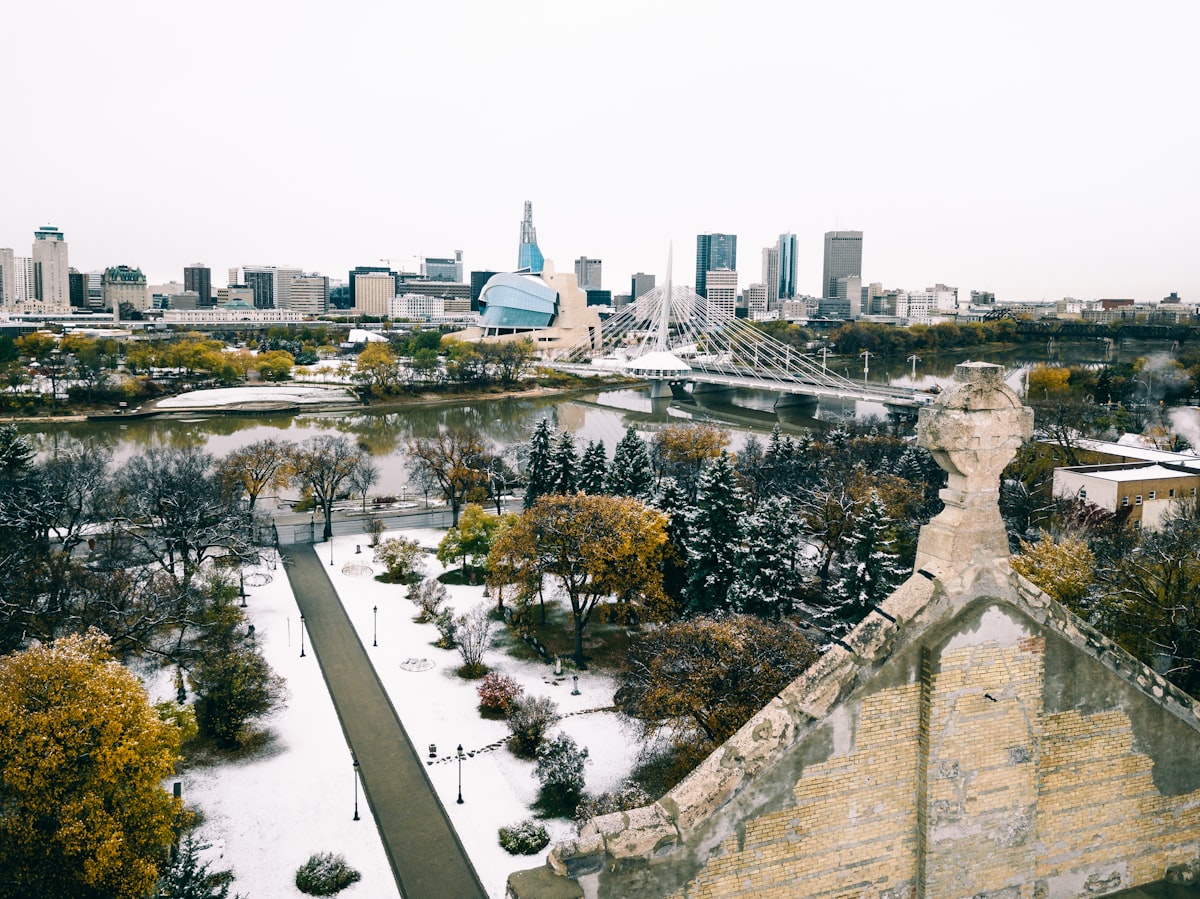 Winnipeg sits at the confluence of the Red and Assiniboine rivers near the geographic centre of North America, a meeting place for over 6,000 years on Treaty One Territory. The name derives from the Cree word meaning "muddy water." Indigenous peoples including the Anishinaabe, Ininew, and Dakota nations, along with the Red River Metis, have inhabited this land for thousands of years before European contact.
The city incorporated on November 8, 1873, four years after the Red River Resistance under Louis Riel's leadership established Manitoba as a province. The Canadian Pacific Railway arrived on July 1, 1886, catalyzing explosive growth - the population climbed from 1,869 residents in 1874 to 194,850 by 1924, transforming Winnipeg into the "Gateway to the West." Severe flooding in 1950 forced evacuation of approximately 100,000 people, prompting construction of the Red River Floodway between 1962 and 1968. In 1972, thirteen municipalities merged, creating the unified City of Winnipeg under the motto "One with the strength of many."
The 2021 census recorded 749,607 residents within city limits, and the population surpassed 850,000 in the CMA by mid-2025. Winnipeg holds Canada's largest urban Indigenous population at 12.4% of residents, alongside significant communities from the Philippines, India, Ukraine, and dozens of other countries - over 100 languages are spoken across the city. The median age is 39 and median household income is approximately $80,000. The economy generates roughly 60% of Manitoba's GDP across five core sectors: aerospace (Western Canada's largest hub), agribusiness ($9.4 billion in agricultural exports), advanced manufacturing, financial services, and a growing technology sector. Major employers include StandardAero, Boeing Canada, Canada Life, and Richardson International.
Explore all Winnipeg homes for sale, or dive deeper with our Winnipeg market trends, most expensive homes, and best neighbourhoods guides.
Winnipeg sits at the confluence of the Red and Assiniboine rivers near the geographic centre of North America, a meeting place for over 6,000 years on Treaty One Territory. The name derives from the Cree word meaning "muddy water." Indigenous peoples including the Anishinaabe, Ininew, and Dakota nations, along with the Red River Metis, have inhabited this land for thousands of years before European contact.
The city incorporated on November 8, 1873, four years after the Red River Resistance under Louis Riel's leadership established Manitoba as a province. The Canadian Pacific Railway arrived on July 1, 1886, catalyzing explosive growth - the population climbed from 1,869 residents in 1874 to 194,850 by 1924, transforming Winnipeg into the "Gateway to the West." Severe flooding in 1950 forced evacuation of approximately 100,000 people, prompting construction of the Red River Floodway between 1962 and 1968. In 1972, thirteen municipalities merged, creating the unified City of Winnipeg under the motto "One with the strength of many."
The 2021 census recorded 749,607 residents within city limits, and the population surpassed 850,000 in the CMA by mid-2025. Winnipeg holds Canada's largest urban Indigenous population at 12.4% of residents, alongside significant communities from the Philippines, India, Ukraine, and dozens of other countries - over 100 languages are spoken across the city. The median age is 39 and median household income is approximately $80,000. The economy generates roughly 60% of Manitoba's GDP across five core sectors: aerospace (Western Canada's largest hub), agribusiness ($9.4 billion in agricultural exports), advanced manufacturing, financial services, and a growing technology sector. Major employers include StandardAero, Boeing Canada, Canada Life, and Richardson International.
Explore all Winnipeg homes for sale, or dive deeper with our Winnipeg market trends, most expensive homes, and best neighbourhoods guides.
Top Neighbourhoods in Winnipeg
Housing in Winnipeg
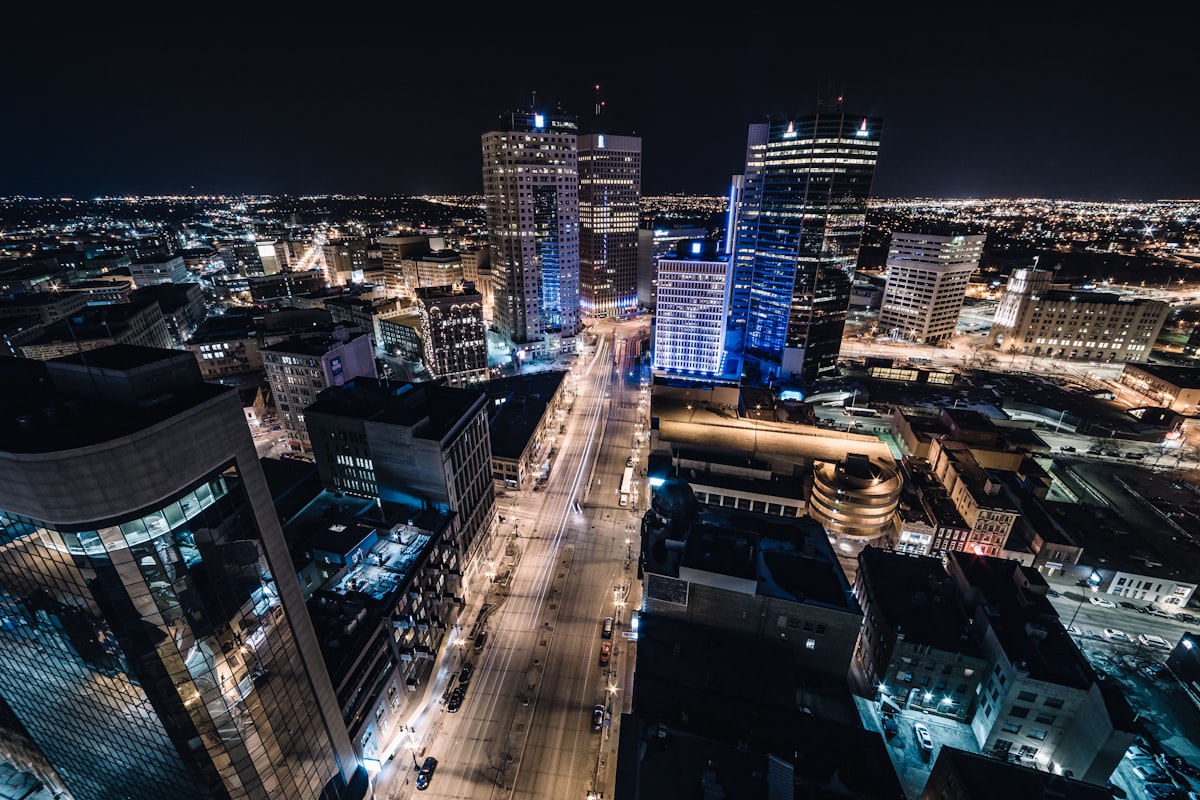 Winnipeg remains one of Canada's most affordable major housing markets. The average sale price across all property types reached $466,276 in 2025, up 6.8% year-over-year. Detached homes averaged $431,079 in early 2026, condominiums sat around $284,086, and townhouses averaged approximately $320,200. The homeownership rate in Winnipeg stands at 63.1%, compared to 68.4% across Manitoba overall. Approximately 17.3% of Manitoba households spend 30% or more of income on shelter costs, below the national average.
Single-detached homes account for 57.5% of the city's 300,000-plus dwellings, with attached homes (townhouses and semi-detached) at 28.6% and apartments at 13.7%. Housing stock ranges widely - from century-old character homes in mature neighbourhoods like the West End and North End to modern suburban builds in communities like Amber Trails and Sage Creek. The luxury segment concentrates in Tuxedo, where estate-scale properties on half-acre lots routinely sell between $800,000 and $2 million.
Infrastructure investment including the BLUE Rapid Transit Line and ongoing corridor development supports market confidence in southwest Winnipeg. Buyers are drawn by affordability relative to Toronto, Vancouver, and other major markets, as well as stable employment anchored by diversified industries. The Exchange District has seen significant revitalization as heritage buildings convert to lofts and creative workspaces, while established inner-city neighbourhoods like Wolseley, Crescentwood, and River Heights attract buyers seeking walkable, mature-tree streetscapes.
For detailed market data, see our Winnipeg market trends analysis. Browse all Winnipeg listings to see what is currently available.
Winnipeg remains one of Canada's most affordable major housing markets. The average sale price across all property types reached $466,276 in 2025, up 6.8% year-over-year. Detached homes averaged $431,079 in early 2026, condominiums sat around $284,086, and townhouses averaged approximately $320,200. The homeownership rate in Winnipeg stands at 63.1%, compared to 68.4% across Manitoba overall. Approximately 17.3% of Manitoba households spend 30% or more of income on shelter costs, below the national average.
Single-detached homes account for 57.5% of the city's 300,000-plus dwellings, with attached homes (townhouses and semi-detached) at 28.6% and apartments at 13.7%. Housing stock ranges widely - from century-old character homes in mature neighbourhoods like the West End and North End to modern suburban builds in communities like Amber Trails and Sage Creek. The luxury segment concentrates in Tuxedo, where estate-scale properties on half-acre lots routinely sell between $800,000 and $2 million.
Infrastructure investment including the BLUE Rapid Transit Line and ongoing corridor development supports market confidence in southwest Winnipeg. Buyers are drawn by affordability relative to Toronto, Vancouver, and other major markets, as well as stable employment anchored by diversified industries. The Exchange District has seen significant revitalization as heritage buildings convert to lofts and creative workspaces, while established inner-city neighbourhoods like Wolseley, Crescentwood, and River Heights attract buyers seeking walkable, mature-tree streetscapes.
For detailed market data, see our Winnipeg market trends analysis. Browse all Winnipeg listings to see what is currently available.
Lifestyle & Culture
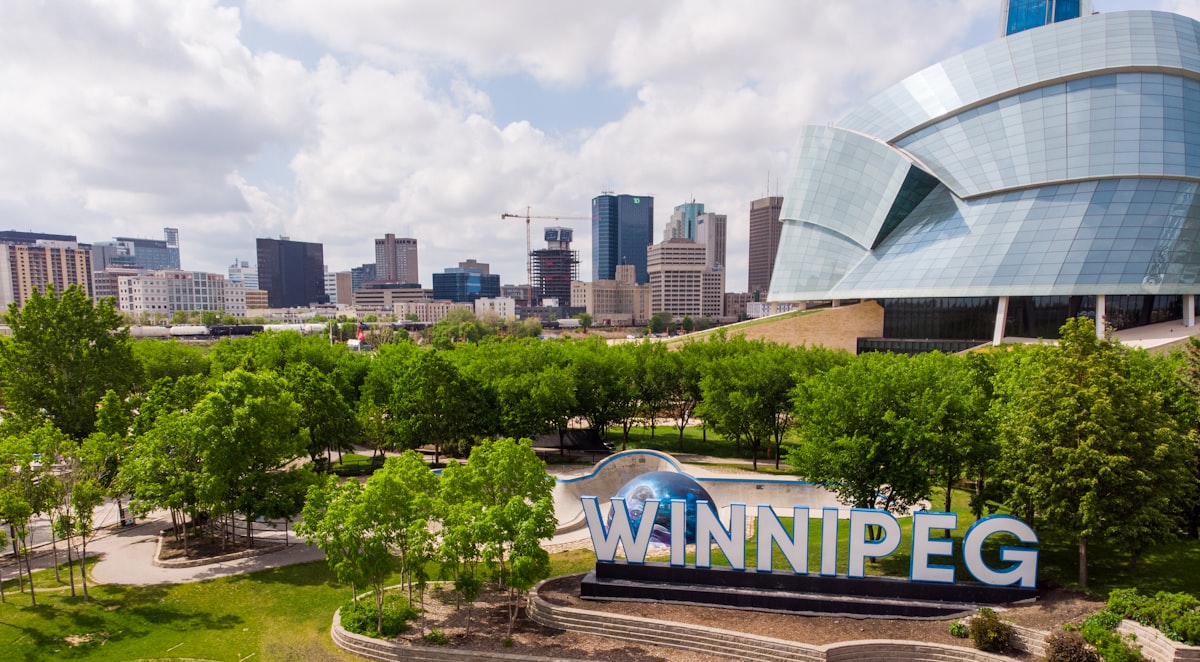 The Forks anchors Winnipeg's cultural identity. Located where the Red and Assiniboine rivers converge, this 6,000-year-old meeting place draws approximately 4 million visitors annually and employs more than 1,200 people on-site, contributing over $235 million a year to the local economy without government funding. The Forks Market operates from 7 AM to 10 PM daily, with Johnston Terminal housing retail and dining, public art installations throughout the grounds, and Parks Canada guided historical tours exploring the site's fur trading post history.
Winnipeg punches well above its weight in arts and culture. The Exchange District, designated a National Historic Site in 1997, contains approximately 20 blocks of intact early-20th-century commercial architecture with over 150 heritage buildings - one of the best-preserved such collections in North America. Today it hosts galleries, restaurants, boutique hotels, condominiums, and nightlife. The Royal Winnipeg Ballet, Canada's oldest ballet company, is headquartered there. The WAG-Qaumajuq houses close to 14,000 pieces of Inuit art from more than 2,000 artists - the largest public collection of contemporary Inuit art in the world - across a 185,000-square-foot campus that opened in March 2021.
Folklorama, held each August, is the world's largest and longest-running multicultural festival, running since 1970 with approximately 3,000 entertainers, 1,500 shows, and 600,000 meals served over two weeks. Festival du Voyageur each February is Western Canada's largest winter festival, celebrating French-Canadian and Metis heritage in Saint-Boniface - the largest French-speaking community in Western Canada. The Winnipeg Folk Festival, Fringe Theatre Festival, Jazz Winnipeg Festival, and Winnipeg International Children's Festival round out a packed cultural calendar. Professional sports include the Jets (NHL), Blue Bombers (CFL, 12-time Grey Cup champions), Manitoba Moose (AHL), and Valour FC (Canadian Premier League).
The Forks anchors Winnipeg's cultural identity. Located where the Red and Assiniboine rivers converge, this 6,000-year-old meeting place draws approximately 4 million visitors annually and employs more than 1,200 people on-site, contributing over $235 million a year to the local economy without government funding. The Forks Market operates from 7 AM to 10 PM daily, with Johnston Terminal housing retail and dining, public art installations throughout the grounds, and Parks Canada guided historical tours exploring the site's fur trading post history.
Winnipeg punches well above its weight in arts and culture. The Exchange District, designated a National Historic Site in 1997, contains approximately 20 blocks of intact early-20th-century commercial architecture with over 150 heritage buildings - one of the best-preserved such collections in North America. Today it hosts galleries, restaurants, boutique hotels, condominiums, and nightlife. The Royal Winnipeg Ballet, Canada's oldest ballet company, is headquartered there. The WAG-Qaumajuq houses close to 14,000 pieces of Inuit art from more than 2,000 artists - the largest public collection of contemporary Inuit art in the world - across a 185,000-square-foot campus that opened in March 2021.
Folklorama, held each August, is the world's largest and longest-running multicultural festival, running since 1970 with approximately 3,000 entertainers, 1,500 shows, and 600,000 meals served over two weeks. Festival du Voyageur each February is Western Canada's largest winter festival, celebrating French-Canadian and Metis heritage in Saint-Boniface - the largest French-speaking community in Western Canada. The Winnipeg Folk Festival, Fringe Theatre Festival, Jazz Winnipeg Festival, and Winnipeg International Children's Festival round out a packed cultural calendar. Professional sports include the Jets (NHL), Blue Bombers (CFL, 12-time Grey Cup champions), Manitoba Moose (AHL), and Valour FC (Canadian Premier League).
Getting Around
The Trans-Canada Highway (Highway 1) runs east-west through Winnipeg, with the Perimeter Highway (101/100) encircling the city. Highway 75 connects south to the U.S. border and Interstate 29 toward Minneapolis. Winnipeg's central location makes it a key node in North American road and rail freight networks. Winnipeg Transit recently launched a redesigned Primary Transit Network now in full service. The BLUE Rapid Transit Line - the city's first dedicated rapid transit corridor - connects southwest Winnipeg via a bus-only roadway with speeds up to 80 km/h. The Transit Master Plan envisions six rapid transit corridors forming three full lines, with Park and Ride facilities planned across the city. The WINNpass low-income transit program supports affordable access, and the Peggo fare card provides a reloadable payment option. Winnipeg Transit Plus provides specialized door-to-door service for eligible residents. The city is also expanding cycling infrastructure and multi-use paths along the Red and Assiniboine rivers. Winnipeg James Armstrong Richardson International Airport (YWG) is the seventh-busiest in Canada, handling 4.4 million passengers annually across 43 destinations in seven countries. Designated Canada's first international airport in 1931, YWG is located approximately 7 kilometres southwest of downtown. Airlines serving Winnipeg include Air Canada, WestJet, Flair, United, and several charter carriers. The airport also functions as a significant cargo hub given Winnipeg's position at the geographic centre of North America.
Education
Winnipeg's K-12 system spans seven school divisions serving distinct geographic areas of the city. The Winnipeg School Division (WSD), headquartered at 1577 Wall Street East, is the largest, operating elementary, junior high, and senior high schools across central Winnipeg. WSD offers vocational education through R.B. Russell Vocational High School and Technical Vocational High School, along with alternative, language, and Aboriginal education programs. Pembina Trails serves the southwest, Louis Riel serves the southeast and Saint-Boniface area, River East Transcona covers the northeast, St. James-Assiniboia serves the west, and Seven Oaks covers the northwest. The Division scolaire franco-manitobaine provides French-language instruction across the province. French Immersion programs are available across most divisions, and English as an Additional Language programs serve Winnipeg's large newcomer population. The University of Manitoba, established in 1877 as the first university in Western Canada, enrolls more than 31,000 students. A member of the U15 group of Canada's leading research universities, it is the only research-intensive post-secondary institution in Manitoba and attracts the most research funding in the province. It offers more than 250 undergraduate and graduate programs and educates the majority of Manitoba's lawyers, engineers, architects, actuaries, and healthcare professionals. Research strengths include Arctic science through the Churchill Marine Observatory, agricultural innovation, and climate and water security. The University of Winnipeg offers arts, science, and graduate programs in downtown Winnipeg. Canadian Mennonite University and Universite de Saint-Boniface provide additional options. Red River College Polytechnic is Manitoba's largest applied learning institute with over 200 programs and more than 21,000 students enrolled annually.
Parks, Shopping & Amenities
Assiniboine Park is managed by the Assiniboine Park Conservancy under a 50-year lease with the City of Winnipeg. The park has served as a hub of year-round activity for over a century. Its zoo spans over 80 acres with indoor and outdoor exhibits, accredited by the Association of Zoos and Aquariums and the World Association of Zoos and Aquariums. The Leaf, described as the most significant horticultural development undertaken in Canada in the past 25 years, features four indoor biomes and interactive displays exploring plant-human connections, surrounded by approximately 30 acres of gardens. The Leo Mol Sculpture Garden and English Garden are among the park's outdoor highlights, along with the Lyric Theatre (free outdoor entertainment) and pavilion art galleries. Adjacent Assiniboine Forest covers 280 hectares, one of Canada's largest urban nature forests. FortWhyte Alive is a 660-acre reclaimed urban green space dedicated to environmental education, outdoor recreation, and social enterprise. It features lakes, wetlands, prairie grasslands, and bison herds. Programs include Forest School, guided tours, day camps, and gear rentals. FortWhyte Farms is a social enterprise producing food sustainably and creating youth employment through a summer market. The Canadian Museum for Human Rights at The Forks is the first museum in the world dedicated solely to human rights, featuring 11 galleries and a 100-metre Tower of Hope with panoramic city views. Shopping includes CF Polo Park (Manitoba's largest), St. Vital Centre (150-plus shops), Seasons of Tuxedo (anchored by Manitoba's only IKEA), and Kildonan Place. The Exchange District offers independent boutiques, galleries, and dining in heritage buildings.
Winnipeg Market at a Glance
$453,339
Avg Price
$379,900
Median Price
1,482
Active Listings