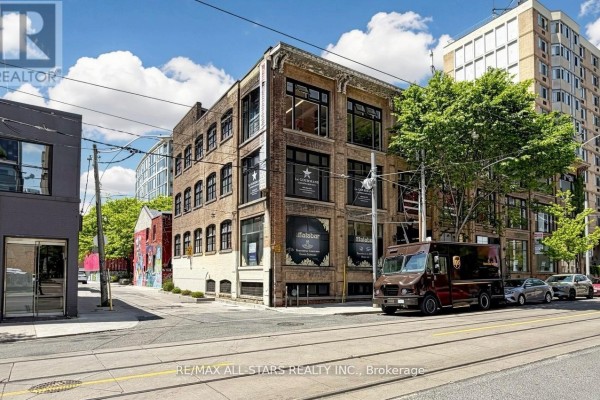
After a sharp correction from the 2022 peak, the Toronto market has shifted into a far more predictable phase. Prices have reset, rents have stabilised, and interest rates are no longer swinging wildly. From an income and risk perspective, this is one of the cleanest setups we have seen in years, especially for investors focused on cash flow and value-add, not speculation.
The market has reset. Prices are still off their peaks, interest rates are easing, and buyers finally have leverage again. You can actually negotiate, add conditions, and buy right without fighting 10 offers for one listing.
Browse Toronto homes for sale to see current investment opportunities, or review our market trends analysis for the latest pricing data.
After a sharp correction from the 2022 peak, the Toronto market has shifted into a far more predictable phase. Prices have reset, rents have stabilised, and interest rates are no longer swinging wildly. From an income and risk perspective, this is one of the cleanest setups we have seen in years, especially for investors focused on cash flow and value-add, not speculation.
The market has reset. Prices are still off their peaks, interest rates are easing, and buyers finally have leverage again. You can actually negotiate, add conditions, and buy right without fighting 10 offers for one listing.
Browse Toronto homes for sale to see current investment opportunities, or review our market trends analysis for the latest pricing data.
Why Toronto Still Leads for Investors
Toronto's economy is not built on one sector. Tech, finance, healthcare, education - it is all here. This diversity maintains stable job markets and consistent rental demand across economic cycles. Toronto is not sprawling outwards. Between zoning limits, high construction costs, and population growth, the supply crunch is not going away. Even with the market dip in 2025, prices never crashed - they just corrected. As rates ease through 2026, affordability is improving, setting the stage for recovery. Toronto's population keeps growing, and almost half the city rents. Immigration, jobs, and limited supply mean landlords rarely struggle to fill units - especially well-located ones with modern layouts or multiple suites.
2026 Market Outlook
TRREB forecasts GTA home sales will range between 60,000 and 70,000 transactions. Market activity in the first half of the year is expected to resemble 2025 levels, as many households remain cautious about committing to long-term mortgage payments. The GTA average price forecast range for 2026 is between $1 million and $1.03 million. Average selling prices will likely be lower year-over-year in the first half of 2026 before stabilizing in the second half, if buyers start moving off the sidelines and market conditions tighten. Elevated inventory levels across most market segments are expected to continue providing buyers with substantial negotiating power, particularly in the condominium apartment market. First-time buyers could be a key driver of recovery in the months ahead, with Ipsos polling showing that 45 per cent of intending homebuyers in 2026 will be first-time buyers.
Why Risk Is Lower in 2026
Prices across much of Toronto are sitting close to 30% below peak levels. That adjustment did the hard work already. Most of the downside risk that scared investors in 2023 and 2024 has been flushed out. When values stop falling, underwriting gets easier. You can actually trust your numbers instead of building in extreme buffers just to feel safe. Rents dropped quickly in early 2025 and spooked a lot of people. But by late spring, the declines slowed and rents levelled off. Over the past several months, rental rates have been relatively steady. Stable rents are critical for investors. They make cash flow predictable and underwriting realistic. Right now, prices are still depressed from the correction, but borrowing costs have already come down. That has created a wider-than-normal gap between rent yields and interest rates. Income looks unusually strong relative to financing costs. This setup does not happen often and it never lasts forever. For income-focused Toronto investors, this is one of the most attractive yield environments since the COVID era.
Cap Rates by Property Type
Cap rate measures the return a property generates based strictly on its income. The formula is Net Operating Income (NOI) divided by Current Market Value. Mortgage payments are not included - cap rate evaluates the asset, not your financing.
| Property Type | Typical Toronto Cap Rate |
|---|---|
| Condo | ~3.5% |
| Single-Family Rental | ~4% |
| Small Multiplex | 5-5.5% |
| Commercial Multi-Family | ~4.5% |
| Garden / Laneway Suite | 8%+ |
| For most Toronto multiplex investors, the target is at least 5% to create breathing room for financing costs and unexpected repairs. Lower than that and you are relying heavily on appreciation. Higher than that usually means more risk, heavier renovation, or weaker location. | |
| Toronto cap rates are lower than many secondary markets for one reason: demand. Strong population growth, limited land supply, stable rental demand, and long-term appreciation potential. You are trading higher immediate yield for stronger long-term appreciation, higher liquidity, lower vacancy risk, and better refinance potential. | |
| At a 5% cap rate, every $10,000 increase in NOI adds $200,000 in property value. |
Rental Market Conditions
The cost of rent in Toronto is continuing to drop. Toronto's rental prices hovered at an average monthly rate of $2,482 in February, reflecting a 5.3 per cent decline from the same time in 2025. It is also 11.7 per cent lower than what the city's rental market saw in 2024. The city saw the steepest declines across most dwelling types, with studios dropping by 7.9 per cent, one-bedroom units by 6.9 per cent and two-bedroom units by 7.1 per cent. There is an influx of supply in Toronto, with a glut of new purpose-built rentals and condos entering the market. Ralph Fox, broker of record and co-founder of Fox Marin Associates, says overall rents were getting out of whack relative to incomes, and this is a healthy breather. The surplus of supply has prompted a rise of rental incentives across newer buildings - from a couple of months of free rent or parking, or even Aeroplan points.
Where to Invest in Toronto
Forget buying where it is already expensive. Focus where the city is growing next. Transit corridors near the Eglinton Crosstown, Ontario Line, and upcoming subway extensions. EHON Zones prepped for multiplex and sixplex approvals. Gentrifying areas like East York, Corso Italia, Oakwood, and parts of Scarborough are gaining traction fast. These pockets are cheaper to enter, easier to cash flow, and better positioned for appreciation once demand picks back up. Policy changes have opened significant opportunities for investors: secondary suites (legal basement apartments), laneway suites (backyard homes on laneways since 2018), garden suites (backyard homes without laneways since 2022), multiplexes (up to 4 units per lot city-wide since 2023), and sixplexes in 9 wards (allows up to 6 units as-of-right since 2025).
Real Examples in Today's Market
Turnkey multiplexes in midtown Toronto are trading under $1 million and generating over $1,000 per month in positive cash flow after expenses and financing. That level of clean cash flow was almost impossible to find during the peak years. On the value-add side, dated semis around $900,000 can be converted into three legal units with roughly $200,000 in renovation costs. These projects can generate close to $2,000 per month in positive cash flow and support finished values around $1.3 million. That is roughly $200,000 in forced equity, plus ongoing income. A renovation strategy example: purchase at $800,000, renovations $150,000, total cost $950,000, annual NOI after renovations $55,000, cap rate 5.8%. At a 5% market cap rate, that $55,000 NOI supports a value of $1,100,000 - roughly $150,000 in created equity.
Value-Add Strategy
Whether it is turning a bungalow into a triplex, finishing a basement suite, or adding a garden suite, small projects with strong rent lifts can outperform any passive buy-and-hold. You are not shopping for your dream home - you are buying a business. Target areas with growth potential, not emotional appeal. Renovate smart, raise rents, refinance - repeat. That is how you scale faster without needing to save another down payment. As of 2026, interest rates have moderated while many cap rates have not fully adjusted. That creates selective opportunities for disciplined buyers. But cap rate alone does not guarantee cash flow. You still need to stress-test financing properly. For more on financing, see our mortgage affordability guide or browse the best neighbourhoods to narrow your search.