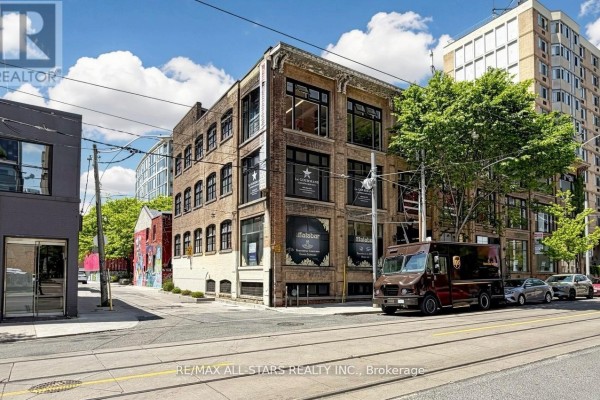
Toronto is one of Canada's most expensive cities, with housing, groceries, transportation, and childcare driving the majority of monthly living expenses. If it feels like your money does not go as far as it used to, you are not imagining it. Across Toronto and the Greater Toronto Area (GTA), many are feeling financial pressure due to rising living expenses. From higher rents and grocery prices to rising mortgage rates and utility bills, everyday costs have climbed faster in the city than most wages. See what is available on the market by browsing Toronto homes for sale or Toronto rentals.
Why the Cost of Living Is So High
There are several economic and structural factors that have pushed living expenses higher over the past decade. Population growth has increased demand for housing. Inflation has raised the price of everyday goods and services. Higher interest rates have affected both homeowners and renters. And while wage growth has occurred in some sectors, it has not always kept pace with rising costs. New housing construction has not kept pace with demand, especially in desirable neighbourhoods close to transit and downtown employment centres. The job market remains volatile, and salaries have not kept pace with rental prices, making housing one of the biggest financial commitments for residents.
Monthly Cost Breakdown
The table below shows estimated monthly costs for a single adult renting a one-bedroom apartment in Toronto.
| Category | Estimated Monthly Cost |
|---|---|
| Rent (1BR apartment) | $2,200 |
| Utilities (electricity, heat, water) | $130-$350 |
| Internet | $50-$120 |
| Phone plan | $32-$100 |
| Groceries | $345 |
| Transit (TTC monthly pass) | $156 |
| Car ownership (loan, insurance, gas, parking) | $1,623 |
| Tenant insurance | $26 |
| Health and dental (out-of-pocket) | $268 |
| Personal spending | $436 |
Housing and Rent
Toronto consistently ranks among the priciest rental markets in Canada, with rent for a one-bedroom apartment costing approximately $2,200 as of March 2026. Housing costs should ideally stay below 30-35% of your gross income to ensure they are financially sustainable. Downtown units are more expensive than those outside the core or in parts of the GTA, and living alone is also more costly than sharing with roommates or a partner. The cost of rent in Toronto is continuing to drop. Toronto's rental prices hovered at an average monthly rate of $2,482 in February, reflecting a 5.3 per cent decline from the same time in 2025. It is also 11.7 per cent lower than what the city's rental market saw in 2024. The city saw the steepest declines across most dwelling types among Canada's largest markets, with studios dropping by 7.9 per cent, one-bedroom units by 6.9 per cent and two-bedroom units by 7.1 per cent. There is an influx of supply in Toronto, with a glut of new purpose-built rentals and condos entering the market. Giacomo Ladas, associate director of communications at Rentals.ca, said he does not see demand picking up to the point where supply can match it throughout 2026 because there is so much more supply. Ralph Fox, broker of record and co-founder of Fox Marin Associates, says overall rents were getting out of whack relative to incomes, and this is a healthy breather that starts to create an environment, especially for younger people, where they can start to save. The surplus of supply has prompted a rise of rental incentives across newer buildings - from a couple of months of free rent or parking, or even Aeroplan points. People who already have an apartment are now seeing that a building down their street, which is much newer, nicer, has condo-like amenities, is now $800 less than their current rent. Numbeo data for Toronto shows a 1BR city centre apartment at $2,307 per month, 1BR outside centre at $2,005, 3BR city centre at $3,680, and 3BR outside centre at $3,099. If you are considering buying rather than renting, our first-time buyer guide covers the programs that can reduce your upfront costs significantly.
Property Taxes
Toronto property tax is determined by multiplying the Toronto final property tax rate for the year by the MPAC property assessed value. The assessed value comes from evaluations conducted every four years by the Municipal Assessment Corporation (MPAC), which may differ significantly from market value. Property tax consists of two parts: a municipal tax that varies by municipality and an education tax that is uniform across Ontario. Toronto also implements a City Building Fund Levy used for public transit and housing projects. The 2025 residential property tax rate for Toronto is 0.754087%, broken down as municipal rate 0.592653% and educational rate 0.153000%. On a home assessed at $800,000, that works out to about $6,033 per year or $503 per month.
Utilities
Basic utilities for an 85-square-metre apartment - electricity, heating, cooling, water, and garbage - average around $199 per month according to Numbeo data. A mobile phone plan with 10GB or more of data runs about $53 per month, and broadband internet (60 Mbps or faster) costs approximately $71 per month.
Groceries and Food
According to Statistics Canada's Consumer Price Index, grocery prices have been rising faster than overall inflation. This means more of people's income is going towards basic necessities like food. A single adult typically spends $345 per month on groceries, depending on household size, dietary needs, and shopping habits. Current grocery prices from Numbeo: milk $3.76 per litre, bread $3.84 per loaf, eggs $5.09 per dozen, chicken fillets $18.02 per kilogram, beef $21.96 per kilogram, apples $5.12 per kilogram, potatoes $3.35 per kilogram, and lettuce $3.36 per head. A mid-range bottle of wine runs $18.00. Eating out adds up quickly. An inexpensive restaurant meal costs around $25, while a mid-range dinner for two with three courses averages $120. A cappuccino runs $5.51.
Transportation
The TTC monthly pass costs $156, and a single ride is $3.35. Choosing transit over a car can free up a significant portion of your monthly budget and improve financial flexibility. Owning a car adds a car loan, fuel, maintenance, car insurance, and parking fees. In Toronto, car insurance rates are among the highest in Ontario. Combined, these expenses can cost $1,623 per month. Gasoline currently runs about $1.34 per litre.
Childcare
Childcare costs can drastically increase monthly expenses for parents. Even with government-supported programs reducing fees, full-time childcare represents one of the largest non-housing expenses in a family's budget. Numbeo data puts preschool or kindergarten costs at approximately $1,324 per month.
How Much Income Do You Need?
A single renter living alone may need approximately $60,000 or more per year before tax to live comfortably, depending on housing choices and debt obligations. A dual-income household without children may require a combined income of $113,000 or more to manage housing costs and shared living expenses. A family with children, especially those paying childcare costs, may need $130,000 to $150,000 or more, depending on lifestyle and location. The average monthly net salary in Toronto is $5,035 according to Numbeo, which works out to roughly $60,420 per year after tax.
Neighbourhood Comparison
Not all parts of Toronto cost the same. Apartment prices for buyers in the city centre average $12,064 per square metre, compared to $9,389 per square metre outside the core. For a full breakdown of which neighbourhoods offer the best value, read our best neighbourhoods guide. Browse Toronto homes for sale to see current prices, or explore our real estate investment guide if you are looking at Toronto as a long-term investment.